
In the age of Data, are we creating a generation starving for thoughts ?
- | Tuesday | 8th July, 2025
BY- Alok Verma
In an age of limitless information and immersive technology, are we unknowingly raising generations that are more informed but less connected, more reactive but less reflective?
Over the last twenty-five years, the human experience has undergone a deep transformation. From libraries to smartphones, from evening discussions to endless scrolling, we are now surrounded by a constant stream of data. What was once sought with effort is now delivered instantly. The question is—has the abundance of data made us wiser, or has it quietly dismantled our capacity to think?
Data today comes in many forms—text, images, videos, podcasts, tweets, reels, emails, PDFs, search results and AI chats. These are not just tools of convenience. They have become the very environment in which we live. In every waking moment, we are exposed to streams of information that are fast, persuasive and often superficial. They inform us, entertain us, distract us and even direct our emotions—but rarely do they leave us space to think.
Historically, deep thinking was a slow, inward process. The world’s great minds—Socrates, Kabir, Shakespeare, Einstein, Tagore, Aurobindo—arrived at ideas through contemplation, solitude and reflection. Their thoughts shaped the data of their time, not the other way around. But today, we are often reacting to streams of information instead of generating insights from lived experience. In this reversal, we have lost something vital.
.jpg)
Thought has now been replaced by the performance of thought. Social media posts mimic insight, viral clips are mistaken for commentary and AI tools generate perfectly structured writing without any lived understanding. The result is a dilution of depth. Opinions are shaped by trends. Creativity is repackaged as content. And meaning is measured by engagement.
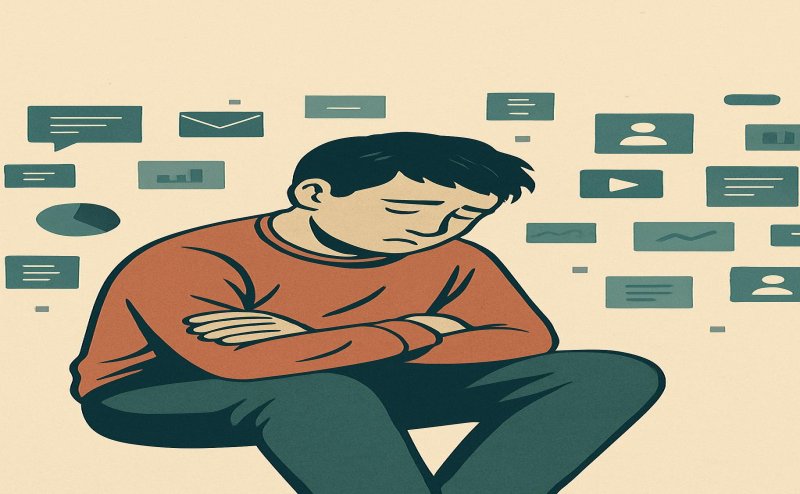
This also leads to another consequence—emotional and social isolation. The more we engage with screens, the less we engage with each other. Children with tablets, teenagers on phones and adults on laptops and phones often coexist in the same home without sharing a conversation. The habit of speaking attentively or listening with presence is fading. Technology was meant to connect us. Instead, it has created digital bubbles of solitude.
It is a paradox. We are connected to everyone, yet often feel truly known by no one. We respond faster than ever, yet reflect less. In this environment, the lonely mind is not empty—it is overwhelmed. Surrounded by information, it loses its ability to pause, imagine or relate.
This fragmentation is further complicated by Artificial Intelligence. AI systems can now write stories, compose music, generate images and mimic human interaction. But AI does not think—it predicts patterns. It offers knowledge, not understanding. And it carries no sense of values, responsibility or emotion. If we are not careful, AI may begin to shape not just what we consume, but how we think.
The danger is not that machines will become like humans. The real risk is that humans will begin to think like machines—fast, data-driven, context-free and emotionally detached. Already, the default pace of life is being set by algorithms. What we see, read and feel is increasingly influenced by systems we do not understand and did not choose.
But this is not a call for despair. It is a call for balance. The tools we now use can still be repurposed. What we need is a cultural shift—one that reclaims the value of thinking, feeling and being human in a world driven by machines.
Education must teach not just information, but interpretation. Critical thinking, ethical reasoning and long-form reading must be revived. Families must preserve time for undistracted talk, shared meals and storytelling. Public policy must regulate AI, not just promote it. And as individuals, we must reclaim the space to sit in silence, to wonder and to form opinions that are not just borrowed but born from our own lives.
The loneliness of the modern mind is not caused by a lack of data—but by a lack of connection. If we are to live well in the age of AI, we must remember that wisdom does not come from knowing everything. It comes from understanding what truly matters. And perhaps the question is not what machines will do to us—but what we will allow ourselves to become in their presence.
(The writer is a senior journalist and founder of www.nyoooz.com)

If You Like This Story, Support NYOOOZ
Your support to NYOOOZ will help us to continue create and publish news for and from smaller cities, which also need equal voice as much as citizens living in bigger cities have through mainstream media organizations.
Stay updated with all the Delhi Latest News headlines here. For more exclusive & live news updates from all around India, stay connected with NYOOOZ.