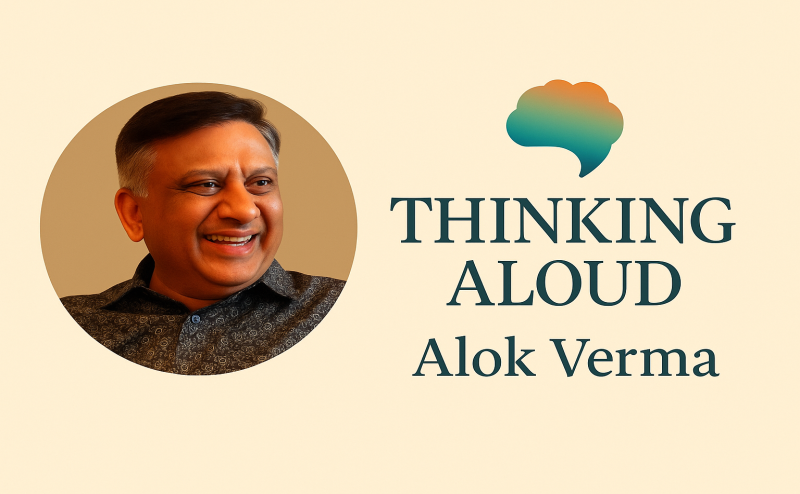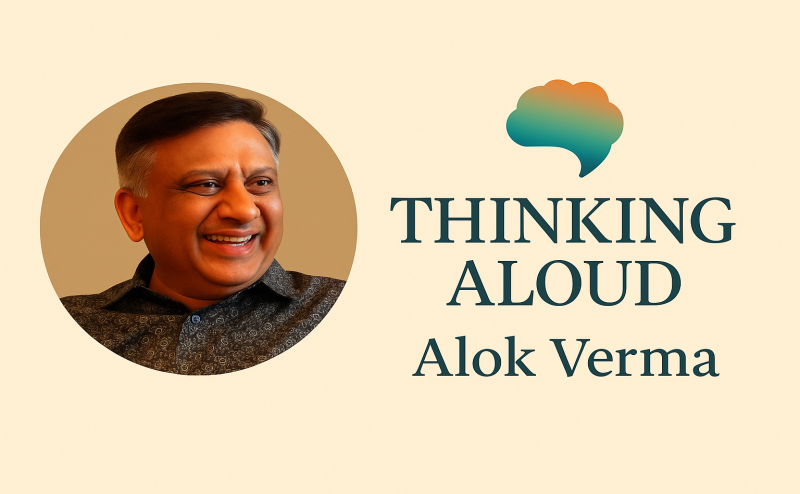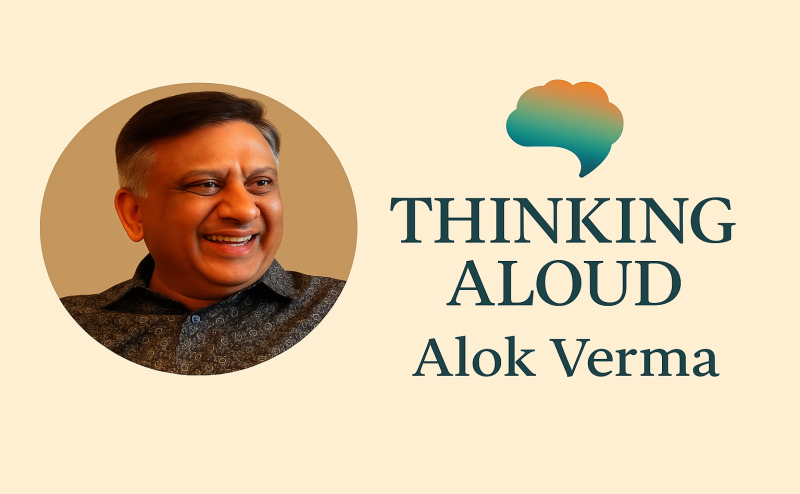

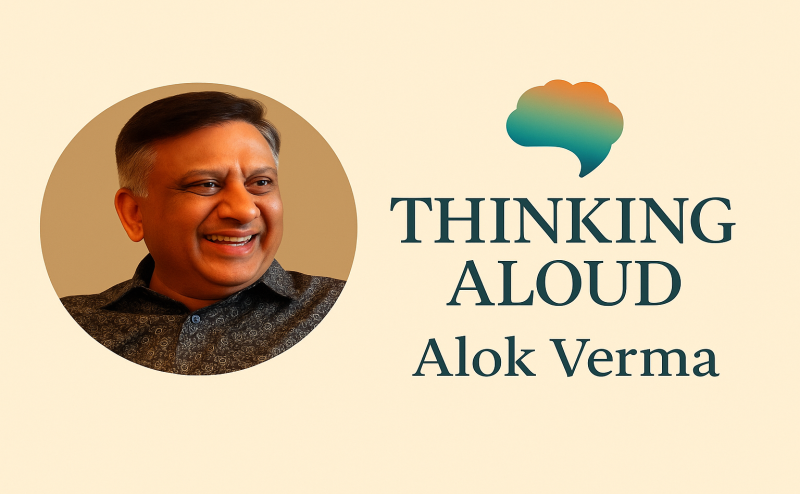
BY-Alok Verma
If even 100 million Indians spend just 15 minutes a day forwarding and consuming WhatsApp messages, the country is losing over 25 million human hours daily. Stretch that to 150 million users and 20 minutes each and the number crosses 40 million hours every single day. This is not time spent in work, learning or meaningful engagement. It is time lost in circulating digital noise. Thousands of years of human productivity quietly dissolve each day into forwarded messages, recycled videos and repetitive greetings.
This loss is not visible. There is no economic indicator to capture it. Yet it represents one of the most silent erosions of attention in modern India.
What drives this behaviour is not ignorance alone. It is a social validation economy. In a hyper-connected environment, visibility has become currency. Forwarding a message is the easiest way to signal presence. It says, “I am active. I am engaged.” The content becomes secondary. The act becomes the message.

Consider the daily routine across millions of phones. A message arrives: “If you drink tea every day, read this carefully.” It carries no credible source, no medical backing yet it is forwarded instantly to five groups. Within minutes, the same message returns from another group, now appearing more credible because others have shared it. The cycle repeats.
This is how India has created its largest invisible workforce — the forwarding class. They create nothing. They verify nothing. Yet they distribute everything. A small minority produces content. A vast majority amplifies it without scrutiny. Reports by the Internet and Mobile Association of India (IAMAI) and Telecom Regulatory Authority of India (TRAI) indicate that India has over 700 million internet users, with messaging apps being among the most heavily used services. The scale of consumption is massive. The quality of filtering remains weak.
Technology has made this effortless. Sharing information once required intent. Today, it requires a tap. No pause. No reflection. This has created a frictionless misinformation pipeline. Even WhatsApp acknowledged the scale of the problem in India when it restricted message forwarding after incidents linked to viral rumours. The label “Forwarded many times” was introduced as a caution. It often works as an endorsement.
The consequences are no longer trivial. During the COVID-19 period, false remedies—from drinking hot water every 15 minutes to consuming specific herbs—circulated widely. Many followed them as preventive measures. The World Health Organization described this as an “infodemic”, where misinformation spreads as fast as the disease itself. At a psychological level, the damage is subtle but deep. Constant exposure to repetitive, low-value and often fear-driven content creates mental fatigue. It reduces attention span. It conditions the mind to consume without questioning.
Repetition adds another layer of distortion. A devotional video titled “Never heard before Hanuman Chalisa” appears in multiple groups. The quality is poor, the claim exaggerated yet repeated exposure creates familiarity. Familiarity creates acceptance. What is repeated often begins to feel true. The structure of Indian social networks amplifies this behaviour. Family groups, alumni groups, neighbourhood groups operate on trust. A message forwarded by a known contact is rarely questioned. It is passed on in good faith. Good intention replaces good judgement.

Then comes the ritual of the “Good Morning” economy. Identical flowers, identical sunrises, identical messages circulate daily. They are forwarded not because they add value but because they sustain a habit. Communication is replaced by compulsion. The larger concern is not about technology. It is about behaviour. When forwarding becomes automatic, thinking becomes optional. When volume increases, value declines. When everything is shared, nothing is filtered.
This raises uncomfortable questions. When did forwarding replace understanding. When did repetition become credibility. When did unverified content become a source of social relevance. A society that confuses activity with contribution risks intellectual dilution. The forwarding class may appear harmless. Its cumulative impact is not. It wastes time, distorts judgement and weakens the habit of thinking.
India does not lack information. It risks losing the discipline to question it.
(The writer is a national award-winning senior journalist and founder Newzstreet Media)

If You Like This Story, Support NYOOOZ
Your support to NYOOOZ will help us to continue create and publish news for and from smaller cities, which also need equal voice as much as citizens living in bigger cities have through mainstream media organizations.
Stay updated with all the Delhi Latest News headlines here. For more exclusive & live news updates from all around India, stay connected with NYOOOZ.