
India Is not corrupt by accident-We built corruption into our culture
- | Saturday | 6th December, 2025

BY-Alok Verma
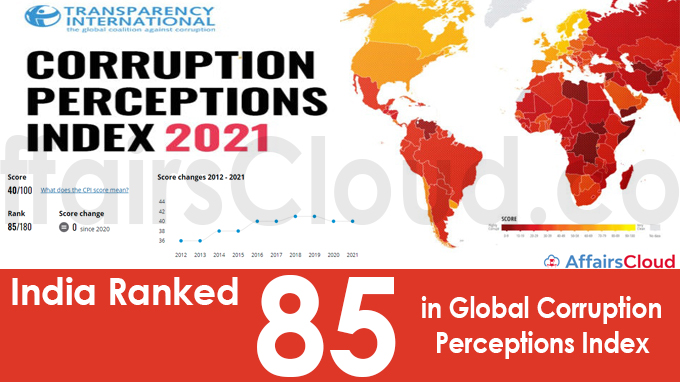
Corruption in India is often explained as greed or dishonesty — but that interpretation is far too shallow for the scale and consistency with which corruption operates here. Greed exists everywhere; yet corruption is not equally pervasive everywhere. In India, corruption has become a predictable, accepted and strangely seamless part of daily life — crossing caste, faith, class, literacy and region. The 2020 Transparency International report revealed that India ranked highest in Asia in bribery for public services, with over half of surveyed citizens admitting they paid a bribe, indicating a behavioural pattern embedded not in individuals alone but in the society they inhabit.
Psychologically, corruption in India is not always a moral failure; it functions as a survival reflex. When systems are unreliable, behaviour evolves faster than rules. In a country where a file can remain stuck for months, where acquiring a hospital bed can demand negotiation, where court cases last decades, shortcuts are seen not as immorality but intelligence. The brain responds to uncertainty with protective reflexes — and in India, corruption often becomes the quickest reflex. The thought process is simple: “If the system cannot guarantee fairness, I must guarantee it myself.” Corruption, in this sense, is adaptive — an insurance policy against inefficiency and unpredictability.
Sociologically, corruption is a social construct reinforced through participation. A citizen paying ₹200 to skip a queue or expedite a document rarely considers themselves corrupt — they consider themselves resourceful. Terms like “approach,” “setting,” “source” and the celebrated Indian word “jugaad” do not merely describe creativity; they describe negotiation with the rulebook. When a student pays for a seat, a builder pays for a clearance or a driver pays to avoid a challan, society does not condemn them — it often respects them for being practical. Social respect is powerful fuel: when corruption becomes a mark of capability rather than guilt, it becomes cultural.
Economically, corruption functions as a compulsion created by contradictions within the system. Many government employees are entrusted with responsibilities far beyond their compensation or capacity. India’s public sector doctor-to-patient ratio still hovers near 1:1,500, far from WHO benchmarks; police personnel work some of the world’s longest hours; and many public jobs require unofficial payments to secure postings. Politicians invest crores to contest elections without transparent funding models. In such circumstances, corruption is not only temptation — for some, it feels like reimbursement. The system creates expectations of service, underfunding of delivery and aspirations of advancement — corruption becomes a bridge between the three.
Historically, corruption also reflects an inherited mistrust of authority shaped by centuries of extractive rule — first foreign, then feudal, and retargeted rather than dismantled after 1947. For nearly 800 years, governance was a mechanism to extract revenue, not empower citizens. The bureaucracy created by the British was a wall between rulers and the ruled — and that architecture remained. We changed leadership, not the mindset. The citizen learned that negotiating with authority is safer than depending on it. Corruption, therefore, is not the betrayal of trust — it is the symptom of historical mistrust.
Corruption cuts across caste, religion and region
This helps explain why corruption in India cuts across caste, religion and region. A Tamil businessman and a Punjabi farmer may differ in language, faith and culture — but both negotiate similarly with the state to secure rights. Corruption in India does not unify by values; it unifies by insecurity. Everyone — whether privileged or marginalized — deals with the same unpredictable system. In other words, corruption is not identity-based; it is ecosystem-based.
Recent examples across sectors illustrate this point. The Vyapam scandal showed how corruption in education did not simply purchase advantage — it produced unqualified professionals, injecting incompetence into essential services. The Nirav Modi–Punjab National Bank fraud reflected how networks can bypass institutional banking safeguards. The medical referral commission culture, which quietly offers 20–30 percent commission on diagnostics or procedures, has commercialised healthcare decisions in ways that patients rarely perceive but often pay for. Even religious and charitable institutions have faced audit flags and land misappropriation disputes, proving corruption is neither secular nor sacred — it is systemic.

Corruption is no longer an ethical question
The most worrying shift is cultural normalization — corruption has moved from being secret and shameful to being predictable and priced. When both the citizen and the official expect that “something will have to be paid,” corruption stops being an ethical question and becomes an administrative step. The problem is not merely that corruption is practised — it is anticipated.
Digitisation has disrupted parts of this ecosystem — Aadhaar-enabled DBT eliminated many ghost beneficiaries, UPI reduced petty cash leakages, and e-tendering created transparency in procurement. Yet corruption adapted — through crypto, fake invoicing syndicates and layered shell companies. In India, corruption has not disappeared — it has evolved from conversation to code.
So is corruption fundamentally moral, psychological, economic or cultural? The answer is: it is all of them. It is a psychological reflex in an uncertain system, a social construct tightly woven into daily problem-solving, an economic compulsion in a distorted incentive structure, a historical legacy of mistrust and a cultural script that rewrites wrong as competence. That is why corruption is durable.
The question, then, is how to change it. Laws are necessary but insufficient. Faster justice matters — not symbolic arrests. Transparency by design must replace discretion by authority. But most importantly, societal respect must shift. Corruption weakens when the social rewards of manipulation become lower than the risks; when integrity is seen as strength, not naivety; when the honest are protected, not isolated; and when political financing is transparent, not theatrical.
Corruption does not end when people stop taking money — it ends when people stop respecting those who take it. That shift is cultural, not bureaucratic. It begins in homes, in classrooms, in boardrooms and in the applause we choose to give. Because the day India stops admiring the fruits of corruption, the roots will finally begin to die.
(The writer is a national award winning senior journalist & founder, Newzstreet Media)

If You Like This Story, Support NYOOOZ
Your support to NYOOOZ will help us to continue create and publish news for and from smaller cities, which also need equal voice as much as citizens living in bigger cities have through mainstream media organizations.
Stay updated with all the Delhi Latest News headlines here. For more exclusive & live news updates from all around India, stay connected with NYOOOZ.