When noise pauses in Parliament, the nation breathes

  • | Monday | 15th December, 2025

BY - Alok Verma

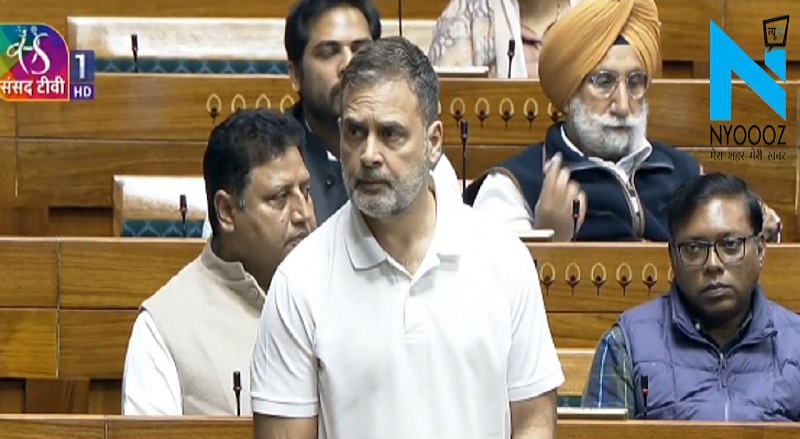
When Leader of Opposition Rahul Gandhi told the government in Parliament that the Congress was willing to extend full cooperation to find practical solutions to India’s air pollution crisis, it marked a clear shift from confrontation to accommodation. In recent years, such a gesture has been rare. More importantly, it created an opportunity for the ruling party to respond in kind on issues where public interest clearly outweighs political rivalry.

This change in tone was reinforced when Priyanka Gandhi Vadra, speaking calmly and without visible hostility, offered that the Congress was prepared to debate every allegation against Jawaharlal Nehru, Indira Gandhi and Rajiv Gandhi in Parliament for whatever time was required. Her condition was simple: once that debate concluded, Parliament should turn its attention to the serious problems confronting citizens today. The message was not about evading scrutiny, but about restoring balance in legislative priorities.

These gestures stand out because they come after years of increasingly sharp and personal exchanges. The ruling BJP has frequently ridiculed Rahul Gandhi and his family—inside Parliament, in official briefings and through party spokespersons. Policy debates have often been diverted into commentary on lineage, intent or past governments, sometimes bearing little relevance to the matter under discussion. Other opposition parties, too, have faced a similar pattern where dissent is dismissed rather than debated.

This approach has shaped the tone of Parliament. When the ruling party sets an adversarial and dismissive tone, it becomes the norm. The Congress is not blameless; it has often chosen disruption over argument. But the imbalance of power matters. A government with a strong majority also carries greater responsibility for maintaining the quality of parliamentary discourse.

Air pollution provides a compelling test case. It is no longer a seasonal inconvenience limited to a few cities. Public health data repeatedly shows its link to respiratory disease, lost productivity and reduced life expectancy. Children, the elderly and working population are affected across regions and political boundaries. This is a crisis that cannot be managed through blame-shifting between the Centre and the states or through short-term emergency measures.

Effective solutions require coordination across ministries, states and political parties. Clean transport, industrial regulation, urban planning and agricultural reform are long-term challenges. Rahul Gandhi’s offer of cooperation recognises this reality. It acknowledges that certain issues demand collective effort, regardless of who sits on which side of the aisle.

The response to such an offer now rests largely with the government. Accommodation does not mean abandoning political positions. It means allowing debate on merit, engaging with alternative views and resisting the temptation to reduce every disagreement to personal or historical attacks. Respecting dissent strengthens governance; it does not weaken it.

Public sentiment is increasingly clear. Citizens are weary of political hostility that produces noise but few solutions. While parties may gain momentary advantage through aggressive posturing, the larger loss is institutional credibility. Parliament risks appearing disconnected from the everyday concerns of people struggling with health, livelihoods and environmental stress.

Whether this moment leads to meaningful change remains uncertain. Indian politics has often seen brief pauses before returning to familiar patterns. But the gesture has been made. It has opened a door—narrow, perhaps but real.

If Parliament chooses to walk through it, even selectively on issues of shared concern, it can begin to reclaim its role as a forum for problem-solving rather than point-scoring. 

The country would be better for it.


If You Like This Story, Support NYOOOZ

NYOOOZ SUPPORTER

NYOOOZ FRIEND

Your support to NYOOOZ will help us to continue create and publish news for and from smaller cities, which also need equal voice as much as citizens living in bigger cities have through mainstream media organizations.


Stay updated with all the Delhi Latest News headlines here. For more exclusive & live news updates from all around India, stay connected with NYOOOZ.

Related Articles