BJP`s Bengal Victory: Discipline, dominance & deep questions

  • | Wednesday | 6th May, 2026

BY-Alok Verma

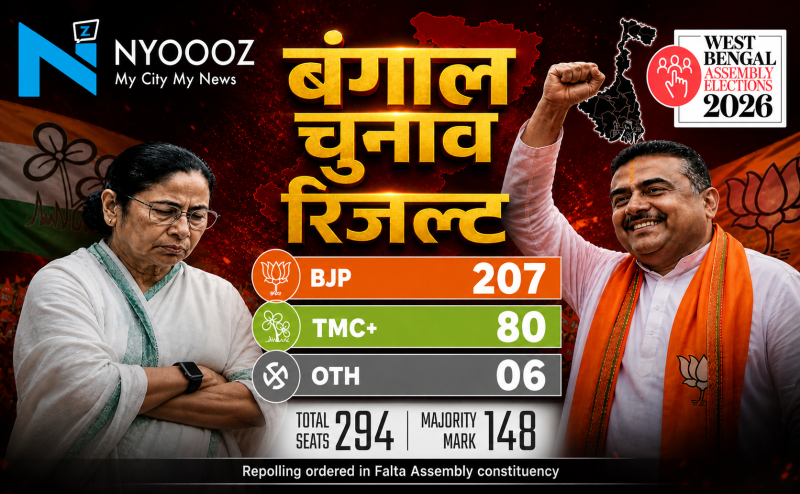
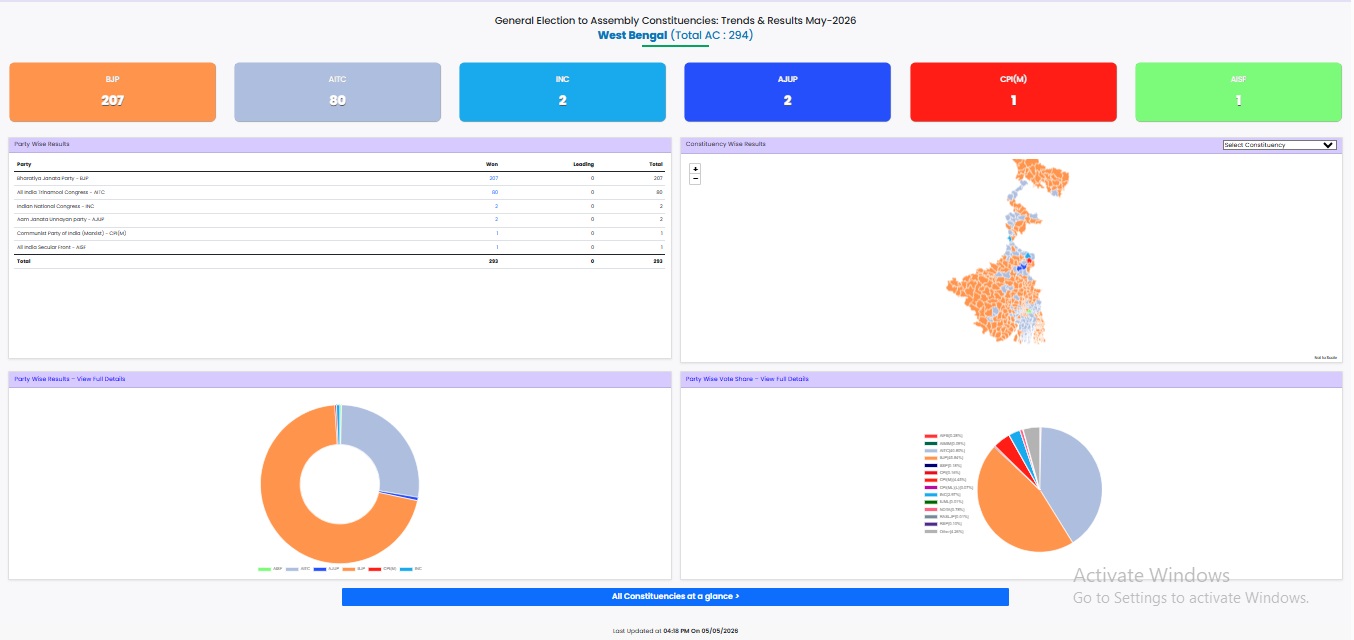
The 2026 West Bengal election result is not just about one party winning and another losing. It is a deeper political message. It tells us how elections are now being fought and more importantly, how voters are thinking.


The BJP’s success in Bengal did not happen suddenly. It is the result of years of disciplined political work. The party has built a strong cadre base that works from the top to the booth level with clarity and coordination. Its messaging is simple, repeated and consistent. It picks a few issues and stays focused on them.


In Bengal, the BJP did exactly that. Law and order, corruption and governance were not raised as isolated issues. They were turned into a continuous narrative. Through digital platforms and ground-level communication, these issues were reinforced again and again. In today’s politics, repetition builds belief.


There is also the factor of resources. Modern elections require money for outreach, logistics and communication. The BJP has the ability to sustain a long and intense campaign. Along with this comes confidence. When a party campaigns with certainty and energy, it creates momentum. Voters begin to see it as a serious alternative.

But no party wins only because it is strong. It also wins because the other side becomes weak.

The Trinamool Congress did not lose in one election. It lost gradually over time. There was growing dissatisfaction among people. Allegations of corruption cut money, recruitment scams kept surfacing. Whether proven or not, they created a perception that governance was not clean. There was also frustration among the youth. Jobs have been limited. Industrial growth has not kept pace with expectations. Many young voters felt that the state lacked a clear economic direction. Welfare schemes helped, but they could not fully address aspirations.


Another issue was local-level politics. Complaints of cadre pressure and uneven administration affected the image of governance. People expect fairness in daily life, not just schemes. When that trust weakens, it reflects in voting behaviour.


This election also brought attention to the role of the Election Commission of India. There was heavy deployment of central forces, and many believe this helped create a safer environment for voting. Yet, at the same time, the Election Commission faced allegations of bias. This is an important point to understand. The issue is not always about whether the process is right or wrong. It is also about whether people trust it. In a politically charged environment, even correct decisions can be questioned.

There are a few reasons for this. When processes like voter list revisions are not explained clearly, doubts arise. When actions appear to affect one side more than the other, even if unintentionally, it creates suspicion. And when communication from institutions sounds defensive or combative, it reduces confidence.


A constitutional body like the Election Commission has a higher responsibility. It must not only act fairly but must also be seen as fair by everyone. Trust is its biggest strength. Once questioned, it becomes difficult to restore.


Another important aspect of this election is the role of Hindutva. It has clearly become a strong political force. But it needs to be understood carefully. For many voters, Hindutva is not just about religion. It is seen as identity, confidence and a sense of belonging. At the same time, it also creates political consolidation. It brings together a large section of voters under one narrative.


To say that it is only polarization would be too simplistic. But to ignore that it can create divisions would also be incomplete. The reality is that it works both ways—it unites and it also sharpens boundaries.


But the bigger question is: how has the opposition responded to this so far? The answer is—not effectively.


The opposition has not been able to present a strong alternative narrative. Its messaging is scattered. Its digital presence is weak. It often reacts instead of leading. Criticism of the ruling party or the system does not work unless it is supported by a clear and positive agenda. In Bengal, this gap became visible. The BJP had a clear message. The opposition did not have a convincing counter.


So what does this election tell us? It tells us that elections today are not just about local issues. They are about organization, narrative, perception and trust—all working together.

It also tells us that voters are changing. They are not just voting against someone. They are choosing who they think is better. And finally, it reminds us of something fundamental. A party can win power through strong systems and strategy. But that power can only be sustained if governance delivers and if institutions continue to be trusted. Because in a democracy, the vote gives authority. But trust gives legitimacy.


(The writer is national award winning senior journalist & Founder, Newzstreet Media)


If You Like This Story, Support NYOOOZ

NYOOOZ SUPPORTER

NYOOOZ FRIEND

Your support to NYOOOZ will help us to continue create and publish news for and from smaller cities, which also need equal voice as much as citizens living in bigger cities have through mainstream media organizations.


Stay updated with all the Delhi Latest News headlines here. For more exclusive & live news updates from all around India, stay connected with NYOOOZ.

Related Articles